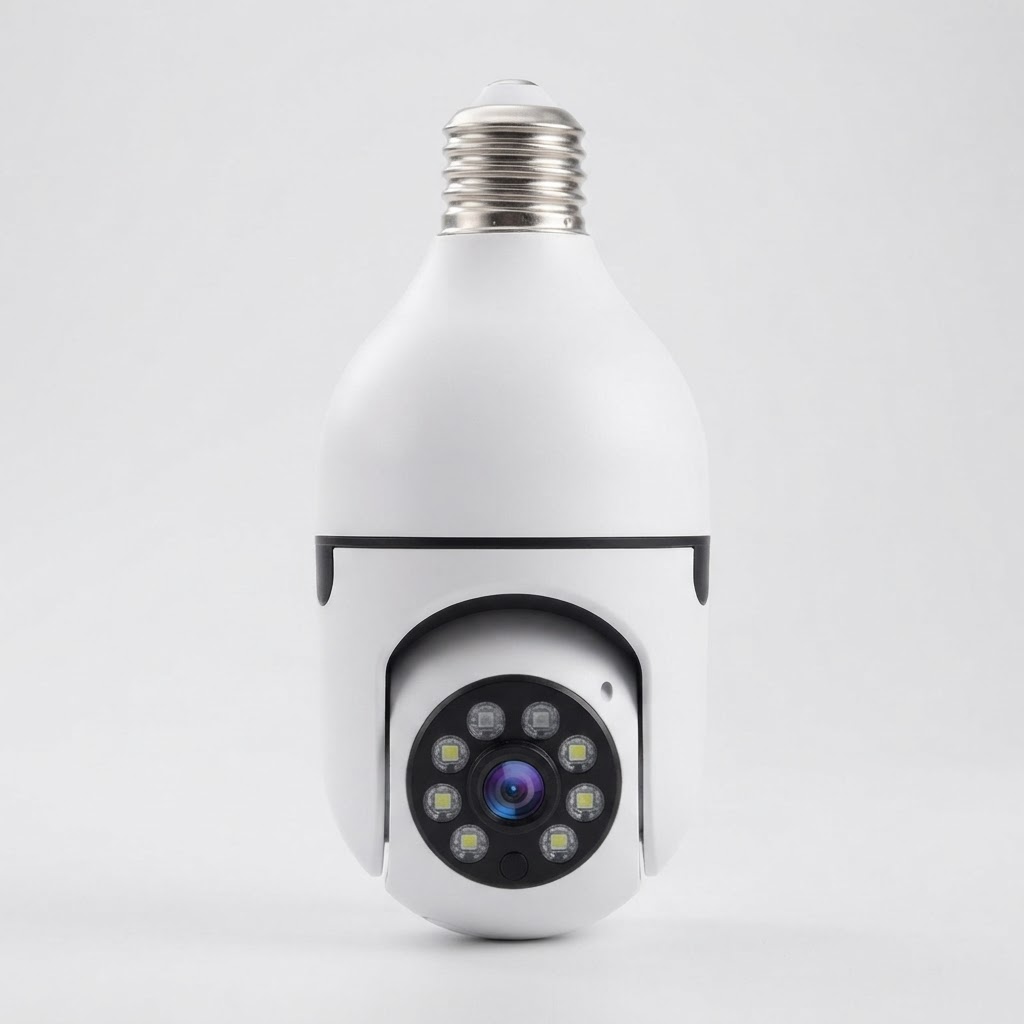
Light Bulb Security Cameras vs. Traditional Outdoor Cameras
When selecting home security equipment, homeowners usually choose between traditional wired cameras and screw-in socket cameras. While both protect your perimeter, their design and setup process differ dramatically. As outlined in [the main guide], socket-based units offer distinct advantages for rental properties and DIY setups.
Installation Effort and Setup Time
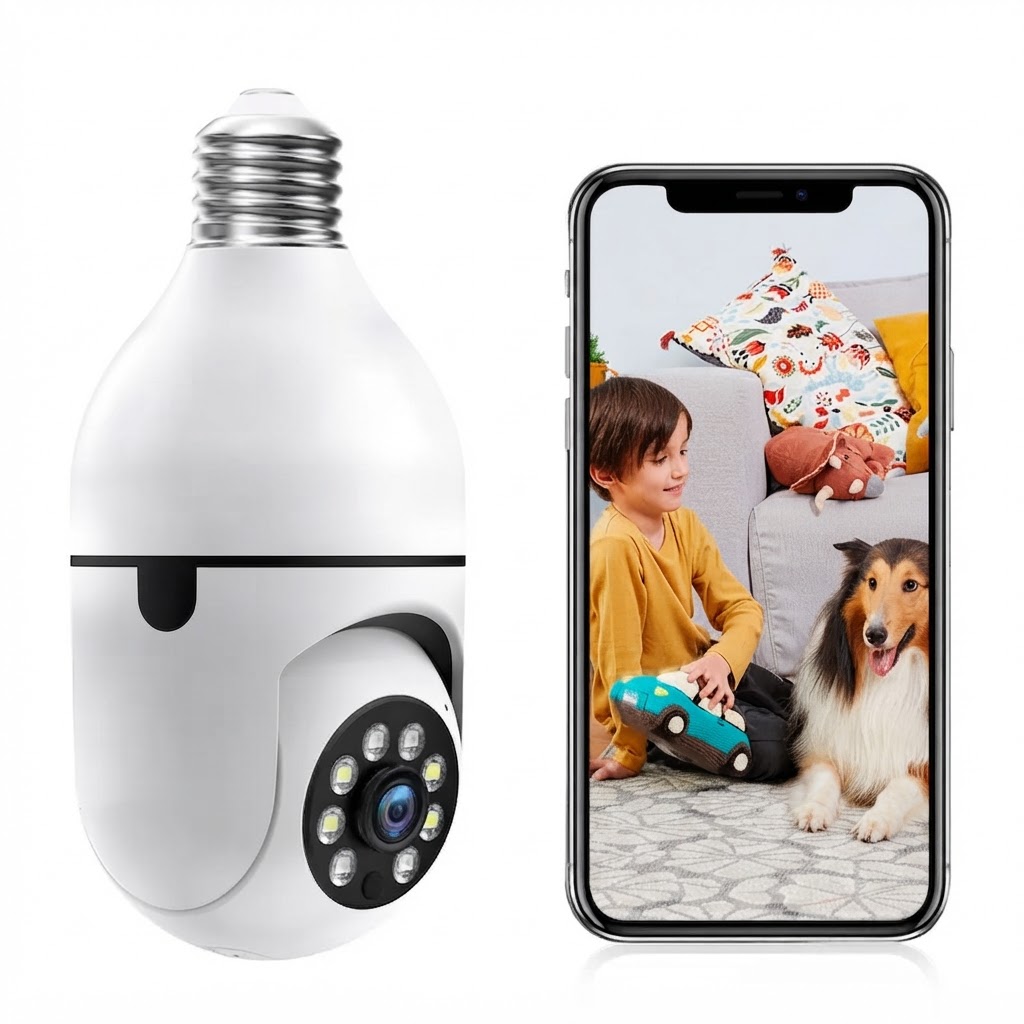
Traditional outdoor security cameras often require mounting brackets, anchors, wall drilling, and running Ethernet or high-voltage power lines. This setup frequently demands professional installation services.
In contrast, a standard E27 socket security camera installs in seconds. By screwing directly into an existing light fixture, installation requires zero tools, drilling, or modified wiring.
Video Quality and Night Vision Performance
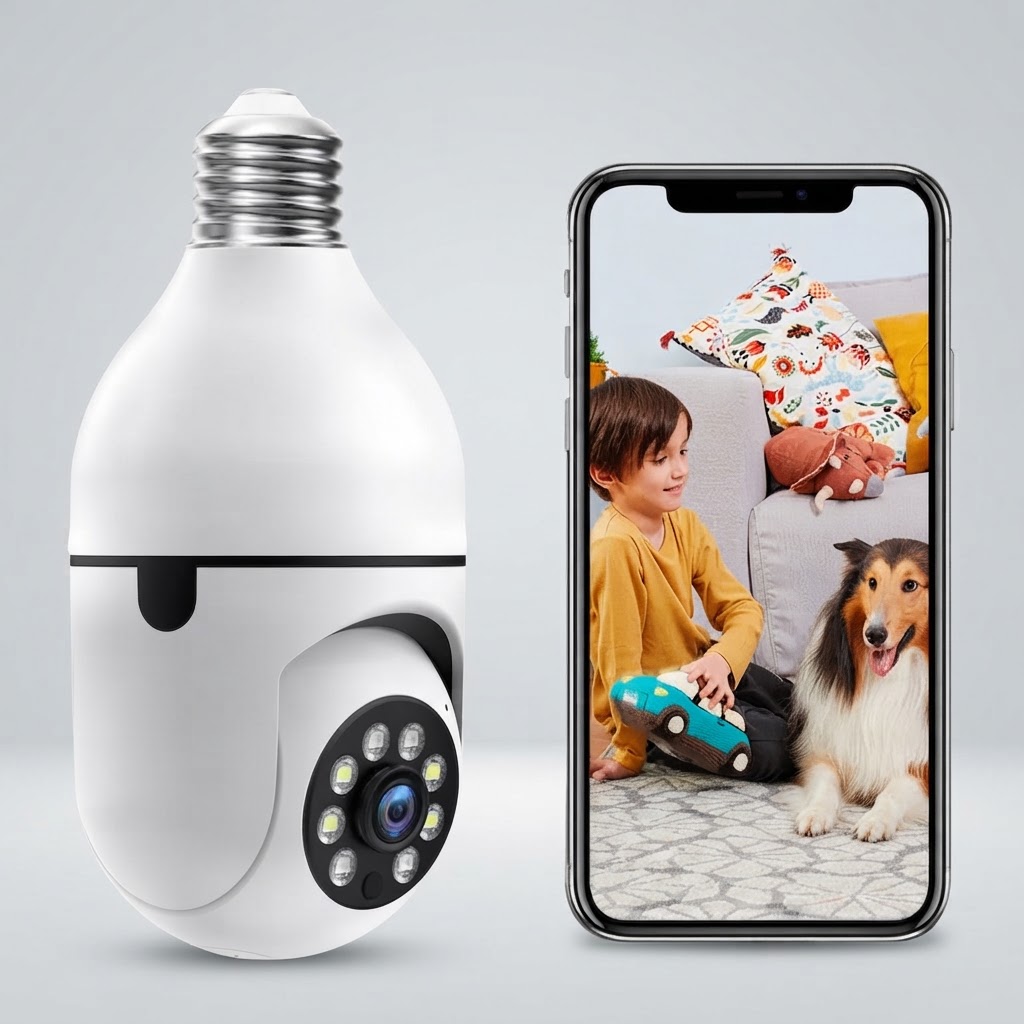
Historically, compact cameras sacrificed image clarity. However, current socket security cameras deliver crisp 2K HD video performance—outperforming standard 3MP cameras. Furthermore, built-in color night vision guarantees clear, colorized video playback even in pitch-black environments.
Power Sources and Maintenance Requirements
Battery-powered wireless cameras eliminate wires but require routine battery recharges every few weeks. Hardwired cameras offer continuous power but lack versatility. A light bulb camera strikes the perfect balance: drawing continuous power from your E27 lamp holder (110V~240V) with minimal power consumption (2-4W).Final Verdict: Which Security Solution Fits Your Home?
For users seeking robust 2K video, continuous power, two-way audio, and tool-free mounting, the Bulb Security Camera delivers comprehensive defense without complex installation overhead.Read the full guide: How Do Light Bulb Security Cameras Work? The Complete Guide to Socket-Based Surveillance