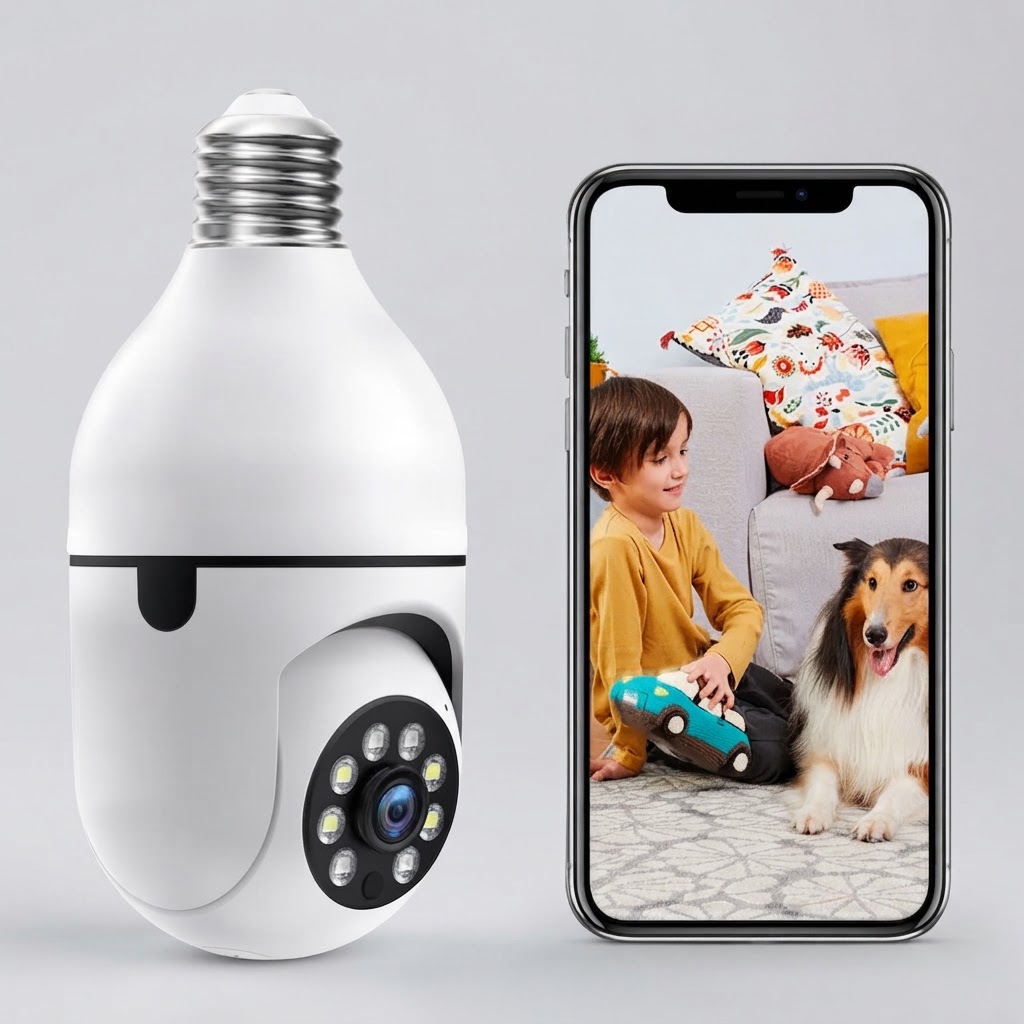
How Do Light Bulb Security Cameras Work? The Complete Guide to Socket-Based Surveillance
Light bulb security cameras represent a significant leap in accessible home security technology. Instead of requiring drilling, complex electrical hardwiring, or constant battery recharges, these devices screw directly into a standard light fixture. But how do light bulb security cameras work under the hood? This guide breaks down the core mechanics of socket-powered surveillance systems.
How Light Bulb Security Cameras Draw Power
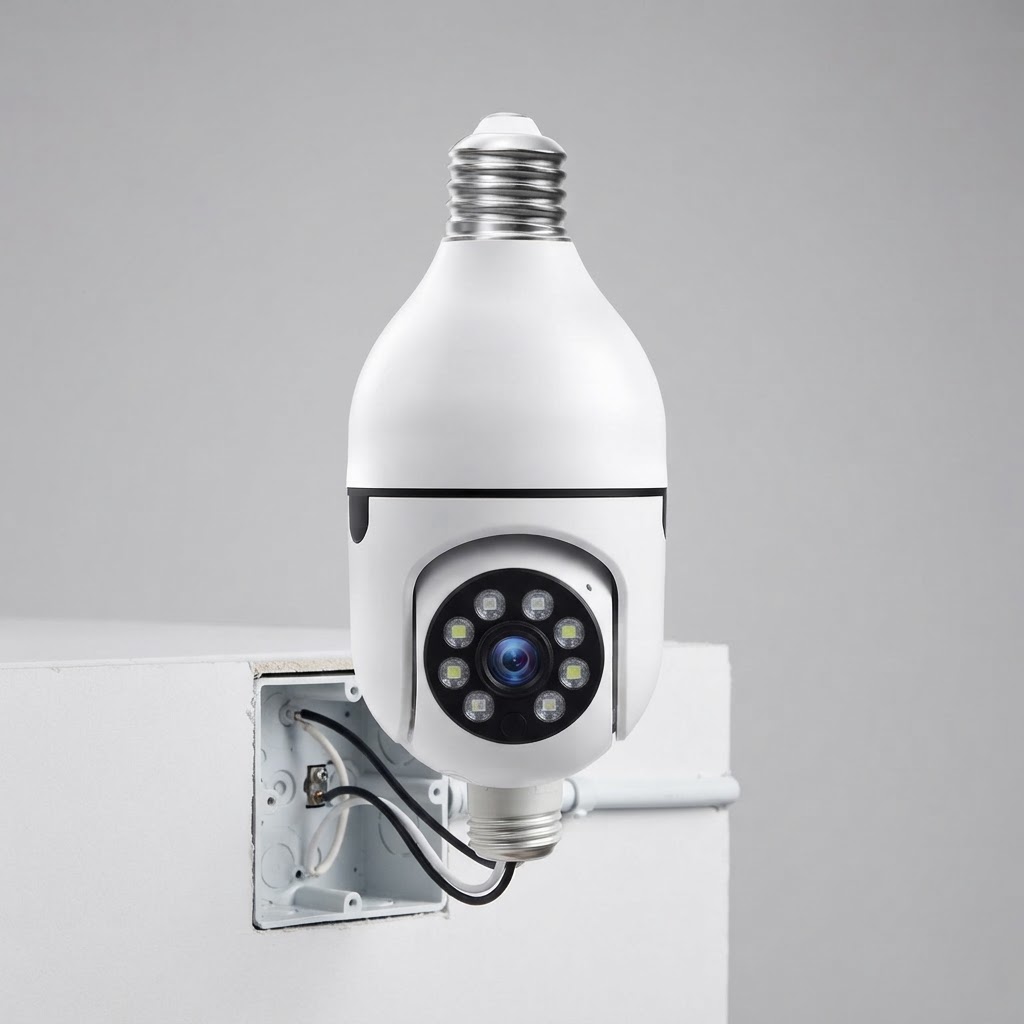
At the core of a socket security camera is its base fixture. Devices like the Bulb Security Camera are engineered to fit directly into a standard E27 lamp holder operating on 110V to 240V power lines. When screwed into an active socket, internal transformers convert the line voltage into low-voltage direct current (DC) needed to run the onboard circuitry.
Because power is continuously supplied through the socket, the unit operates efficiently with a power consumption of just 2 to 4 Watts. As long as the wall switch controlling the fixture remains turned on, the camera stays continuously powered, eliminating the downtime associated with battery replacement.
Camera Optics, 2K HD Video, and Color Night Vision
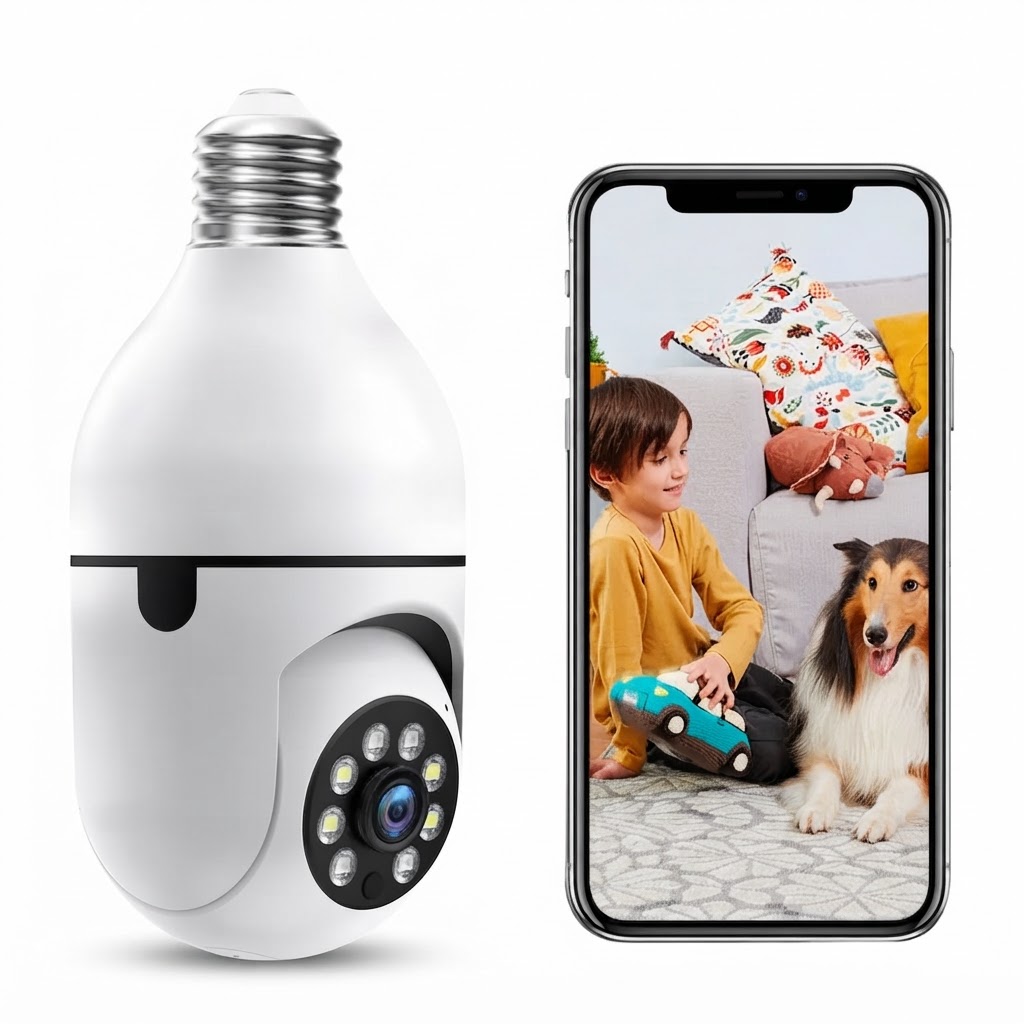
Once powered, the optical sensor captures environment data. High-definition light bulb cameras utilize advanced image sensors capable of outputting 2K HD video resolution, providing significantly sharper clarity than older 3MP models.
During daylight, the sensor records full-color imagery. When ambient light drops, integrated white LEDs and infrared illuminators activate automatically. This enables full color night vision, allowing property owners to identify details like facial features or clothing colors even in complete darkness.
Wireless Connectivity: 2.4GHz and 5GHz WiFi Setup
To transmit footage to your mobile device, the camera utilizes an internal wireless module. Advanced models feature dual-band chipsets supporting both 2.4GHz and 5GHz WiFi frequencies.
The 2.4GHz band offers longer range and better penetration through exterior walls, while the 5GHz band provides higher data throughput for smoother live video streaming. Data is encoded and securely transmitted through your home network to an intuitive mobile application NoahTec App.
Motion Detection and Real-Time Two-Way Audio
To alert homeowners to potential threats, light bulb cameras rely on intelligent motion algorithms. When movement is detected across the field of view, the system triggers real-time mobile push notifications within a range of 30 feet.
Simultaneously, built-in microphones and high-output speakers enable two-way audio communication. This allows users to speak directly to visitors, deliver instructions to delivery drivers, or sound an alert to scare away potential intruders in real time.
Video Storage Options: Micro SD vs. Cloud
Captured video events need to be saved for review and evidence collection. Socket cameras typically support two distinct storage pathways:
Choosing and Positioning Your Socket Security Camera
Because these cameras operate in standard light sockets, placement is straightforward. Outdoor porch lights, garage fixtures, or indoor lamps are prime spots. Operating reliably across working temperatures from -10°C to +50°C, a light bulb camera provides compact (7 x 3 x 3 inches) protection for almost any residential entry point.
Related in this cluster
- Understanding Light Bulb Camera Power and Connectivity
- How to Install a Light Bulb Security Camera in 4 Easy Steps
- Light Bulb Security Cameras vs. Traditional Outdoor Cameras
- Top 5 Features to Look For in Socket Security Cameras
- Protect Your Property Instantly with the NoahTec Bulb Camera
- Light Bulb Security Camera FAQs: Answers to Common Questions